Hair Transplant Myths vs Facts: 10 Common Myths Explained 2026
Do hair transplants look fake, hurt or fall out? 10 common hair transplant myths, answered with honest, cautious facts from a licensed clinic in Lebanon.
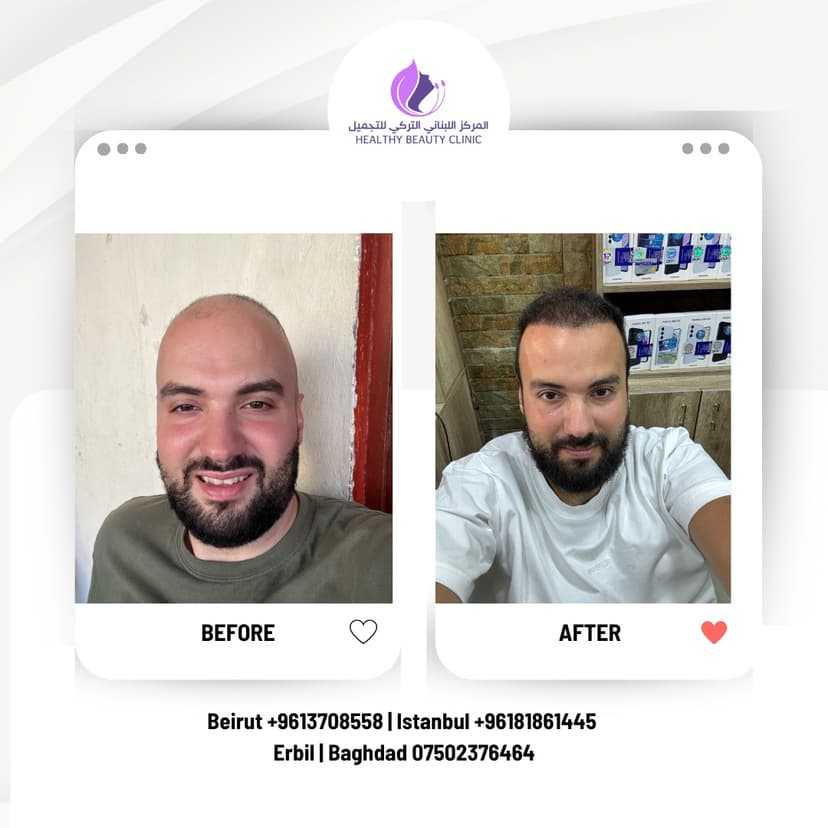
Most hair transplant myths come from old techniques or from someone else's bad experience. A modern transplant, planned well, usually looks natural, is done under local anesthesia, and grows in slowly over 12 to 18 months. It is not instant, it does not stop future hair loss, and it is not right for everyone. That is why an honest scalp exam matters more than anything you read online.
Here are ten common myths and the facts behind them, as explained at Healthy Beauty Clinic in Lebanon.
Myth: A hair transplant always looks fake
Fact: A well-planned transplant usually looks natural, because it uses your own hair. The "doll hair" or "plug" look people remember came from older methods that moved large tufts at once.
Today, FUE and DHI move hair in small natural groups of one to a few hairs, called follicular units. What makes the result look real is mostly planning:
- A hairline that suits your age and face, not too low or too straight.
- Each graft placed at the angle and direction your hair naturally grows.
- A density your donor area can actually support.
Read more on how a natural hairline is designed.
Myth: A hair transplant is very painful
Fact: For most patients it hurts far less than they expect. The procedure is done under local anesthesia, you stay awake, and you go home the same day.
The numbing injections at the start sting for a few seconds. After that, most people feel pressure, not pain. Mild soreness in the first few days is normal and is usually controlled with prescribed medication. See what a hair transplant feels like, step by step.
Myth: Transplanted hair falls out for good
Fact: Transplanted hair usually sheds in the first month. This is expected and is often called shock loss. The hair shaft falls, but the follicle stays under the skin and grows again.
New growth usually starts around month 3 to 4. The grafts come from the back and sides of the head, where hair is usually more resistant to pattern baldness, and they tend to keep that quality after the move. Our guide to shock loss after a hair transplant explains what is normal and when to call the clinic.
Myth: You see the results right away
Fact: A hair transplant is slow. Right after surgery you see small scabs and short hairs, not a finished look.
- Days 5 to 7: most people go back to work.
- Month 1: the transplanted hair sheds.
- Months 3 to 4: new growth begins, often fine at first.
- Months 12 to 18: the final result, as the hair thickens and settles.
The full picture is in our month-by-month results timeline.
Myth: Hair transplants are only for older men
Fact: Age matters less than two things: how stable your hair loss is, and how much donor hair you have.
In younger patients, hair loss may still be progressing, so the doctor may suggest waiting, or slowing the loss first, before planning surgery. Older patients can be good candidates too, if the donor area and their general health allow it. The decision comes from examining your scalp, not from your birth year.
Myth: Women can't have a hair transplant
Fact: Many women can, but the assessment is different. Hair loss in women is often spread across the top of the head rather than in clear bald areas, and sometimes the donor area is thinning too.
So the doctor first looks for the cause and may ask for tests. A transplant tends to suit women with stable loss in a defined area, such as a high or receding hairline, or gaps left by years of tight hairstyles. No-shave DHI can also help, since many women prefer not to shave their head.
Myth: Anyone can donate hair to you
Fact: A hair transplant uses your own hair. Hair from another person would be rejected by your immune system unless you took strong anti-rejection drugs for life, which is not done for cosmetic hair restoration.
Your donor area, usually the back and sides of your head, is also limited. Follicles that are taken do not grow back in that spot, so a careful doctor plans how many grafts to use now and how many to keep for the future. In selected cases a doctor may consider beard or body hair, but scalp hair remains the main source.
Myth: Going abroad is always cheaper overall
Fact: The package price abroad can look lower, but it is rarely the full cost. Add flights, hotel, time off work and often a companion's trip. Then think about follow-up: results take 12 to 18 months, and questions come up long after you fly home.
Compare like with like: how many grafts, who does each step, and what is included. Healthy Beauty Clinic also runs Istanbul packages, so this is not about one country, but about the total. In Lebanon our 2026 prices range from $2,000 to $6,000, set after a scalp exam, with 0% installment plans. See our hair transplant cost in Lebanon 2026 guide.
Myth: One session fixes your hair loss for good
Fact: A transplant moves hair to where it is needed. It does not stop your existing hair from thinning. If your loss is genetic, the hair around the transplant may keep thinning over the years.
That is why a good plan looks ahead. The doctor designs a hairline that will still suit you later, and may discuss ways to protect the hair you have, such as medical treatment or PRP sessions. Some patients choose a second session years later. Never start or stop a medicine on your own; ask your doctor what fits your case.
Myth: You can't cut, dye or style transplanted hair
Fact: Once it has healed and grown, transplanted hair is simply your hair. You can cut, dye, style and wash it as usual.
The only limits are in the early weeks, while the scalp heals. Your doctor will tell you when a haircut, hair dye or styling products are safe, since chemicals and heat can irritate healing skin.
Get the facts for your own scalp
No article can replace an exam. At a free consultation, Dr. Hala Ashkar's team examines your scalp, tells you honestly whether a transplant suits you, and which technique fits. Healthy Beauty Clinic is licensed by the Lebanese Ministry of Health, with branches in Beirut (Furn El Chebbak, Sultan Center, 4th floor) and Jounieh (Kaslik, Dam3a Building, 5th floor). Message us on WhatsApp at +961 3 708 558.
Frequently asked questions
Does a hair transplant look natural?
Usually yes, when it is well planned. Modern FUE and DHI move your own hair in small natural groups, placed at the angle your hair grows. A natural look depends mostly on a hairline that suits your age and face, and on a density your donor area can support.
Is it normal for transplanted hair to fall out?
Yes. Transplanted hair usually sheds in the first month, which is often called shock loss. The follicles stay under the skin, and new growth usually starts around month 3 to 4. The final result is seen at 12 to 18 months.
Is a hair transplant permanent?
The transplanted hair usually lasts long term, because it comes from the back and sides of the head, where hair is more resistant to pattern hair loss. Your original hair around it can still thin over time. Your doctor may discuss ways to protect it, and some patients choose a second session later.
Can women have a hair transplant?
Many women can, but the assessment is different. The doctor first looks for the cause of the hair loss and checks whether the donor area is healthy. A transplant tends to suit stable loss in a defined area, such as a high hairline, and no-shave DHI avoids shaving the head.
When can I cut or dye my hair after a hair transplant?
Once the scalp has healed and the hair has grown, you can cut, dye and style it like the rest of your hair. In the early weeks, wait for your doctor to tell you when a haircut, hair dye or styling products are safe, since chemicals and heat can irritate healing skin.