Finasteride & Minoxidil After Hair Transplant: Lebanon 2026
Finasteride after hair transplant and minoxidil explained: why native hair keeps thinning, when doctors restart them, side effects and PRP options in Lebanon.
Do you need finasteride or minoxidil after a hair transplant? Not always, but many men do. Transplanted hair is usually permanent. Your own native hair can keep thinning, though. At Healthy Beauty Clinic in Lebanon, the doctor checks whether your hair loss is still active and then decides if medication, PRP or nothing at all fits your case.
Why is transplanted hair permanent but my own hair still thinning?
Most male hair loss is androgenetic alopecia, also called male pattern baldness. It is driven by a hormone called DHT (dihydrotestosterone) acting on follicles that are sensitive to it.
The follicles at the back and sides of the head are usually resistant to DHT. That is why this area is used as the donor zone. When these follicles are moved to the front or crown, they generally keep that resistance. So the transplanted hair tends to stay.
The native hair around the grafts is a different story. If it was sensitive to DHT before surgery, it is still sensitive after. A transplant does not stop the hair loss process.
Without a plan to protect native hair, some patients see their own hair thin behind or around the transplanted area over the following years. The result can look less even than it did at month 12.
Do I need medication after a hair transplant?
It depends on your case. A doctor usually considers:
- Your age and how fast you are losing hair. Younger patients with active loss usually benefit most from protecting native hair.
- How much native hair remains in and around the treated area.
- Your family history and your pattern on the Norwood scale.
- Your health and other medicines, plus whether you plan to have children soon.
- What was transplanted. A beard or eyebrow transplant is a different situation from a scalp transplant.
Some patients with stable, long-standing loss may not need any medication. Others are advised to use it long term. Medication is always a choice made with your doctor, never an automatic add-on.
Not sure whether your loss is still active? Our guide to hair loss causes and solutions explains the main types.
What does finasteride do?
Finasteride is a tablet that lowers the amount of DHT the body makes. It does this by blocking an enzyme called 5-alpha reductase.
With less DHT, sensitive follicles are under less pressure. In many men this slows or stops further loss, and some see partial regrowth. Its main role after a transplant is to protect native hair, not to grow the transplanted hair.
- Prescription-only. It should only be taken as prescribed by a doctor who has assessed you.
- Slow to show results. Effects usually take several months to become visible.
- Works only while you take it. If it is stopped, the benefit is gradually lost and loss usually resumes.
- Topical finasteride products also exist in some countries. Whether one suits you is a decision for your doctor.
What does minoxidil do?
Minoxidil was first used as a blood pressure tablet. Doctors noticed extra hair growth as a side effect, and it was later developed as a scalp treatment. It is thought to lengthen the growth phase of the hair cycle and to enlarge thinning follicles.
Unlike finasteride, it does not act on DHT. That is why doctors sometimes combine the two.
- Topical minoxidil (solution or foam) is sold without a prescription in many countries. After surgery, you should still use it only when and how your doctor says.
- Low-dose oral minoxidil is prescription-only and is used off-label for hair loss. It needs medical supervision.
- It also works only while you use it. Stopping usually leads to gradual loss of the gained hair.
When are finasteride and minoxidil restarted after surgery?
Your doctor decides the timing for your case. Practices differ between surgeons, and your health history matters. As general information only:
| Treatment | Around surgery | After surgery |
|---|---|---|
| Finasteride (tablet) | Some doctors keep patients on it; others pause it briefly. Always tell the clinic you take it. | Continued or restarted when your doctor says. |
| Topical minoxidil | Usually paused shortly before surgery. | Usually restarted only once the scalp has healed and the grafts are secure, often a few weeks later. Never on open wounds or scabs. |
| Oral minoxidil | Pausing or continuing depends on your doctor and your health. | Restarted only on your doctor's instruction. |
| PRP | Sometimes planned alongside the procedure. | Sessions scheduled by the clinic. |
Do not restart anything early to "speed things up". Applying a solution to a healing scalp can irritate it. The first weeks are about protecting the grafts; see our aftercare guide.
What are the side effects of finasteride and minoxidil?
Most people tolerate these medicines well. But side effects are real, and you should know them before you start.
Finasteride
- Sexual side effects such as lower libido, erection difficulties or less ejaculate volume. They affect a minority of men and usually go away after stopping. A small number of men report symptoms that persist.
- Mood changes, including low mood or depression, have been reported. Tell your doctor at once if you notice them.
- Breast tenderness or enlargement in some men.
- It lowers PSA, a blood test used to screen for prostate cancer. Always tell any doctor ordering a PSA test that you take it.
Topical minoxidil
- Scalp itching, redness or flaking.
- Unwanted hair on the forehead or face if the product spreads.
- A temporary increase in shedding during the first weeks of use.
- It is toxic to cats, so keep it away from pets.
Oral minoxidil
- Extra body or facial hair.
- Fluid retention, ankle swelling, a fast heartbeat or dizziness. These need medical review, which is why oral minoxidil requires supervision.
Shedding in the first months after a transplant is usually normal and is not a drug side effect. Read about shock loss after a hair transplant.
Is it different for women?
Yes. Female pattern hair loss tends to be diffuse thinning over the top of the head, rather than a receding hairline.
- Finasteride is generally not used in women who are or may become pregnant. It can harm the development of a male baby. Women in this group should not even handle crushed or broken tablets.
- Topical minoxidil is a common first option for women, used under medical guidance. It should be avoided during pregnancy and breastfeeding.
- A doctor may look for other causes first, such as thyroid problems, low iron or hormonal conditions, and may consider other prescription treatments.
See our guide to hair transplant for women for who is a candidate.
What if I don't want to take medication?
That is a valid choice. You can still have a good result, but the plan should account for it.
- PRP (platelet-rich plasma). A small amount of your own blood is processed and the plasma is injected into the scalp. It is often used to support existing hair and healing. Evidence is promising but results vary between people. At Healthy Beauty Clinic, PRP costs $500 to $800 per session. Compare the options in PRP vs hair transplant.
- A conservative design. If native hair may thin later, the doctor can plan the hairline and graft distribution so the result still looks natural over time.
- Regular follow-up. Photos over the years show whether loss is progressing, so you can revisit the decision.
Key facts
- Transplanted hair comes from DHT-resistant donor follicles and is usually permanent.
- A transplant does not stop the hair loss process in your native hair.
- Finasteride is prescription-only and works by lowering DHT. Minoxidil works differently and supports the growth phase.
- Both work only while used. Benefits fade gradually after stopping.
- When to restart them after surgery is decided by your doctor, usually once the scalp has healed.
- PRP at Healthy Beauty Clinic costs $500 to $800 per session and is an option for people who prefer to avoid medication.
Who wrote this guide?
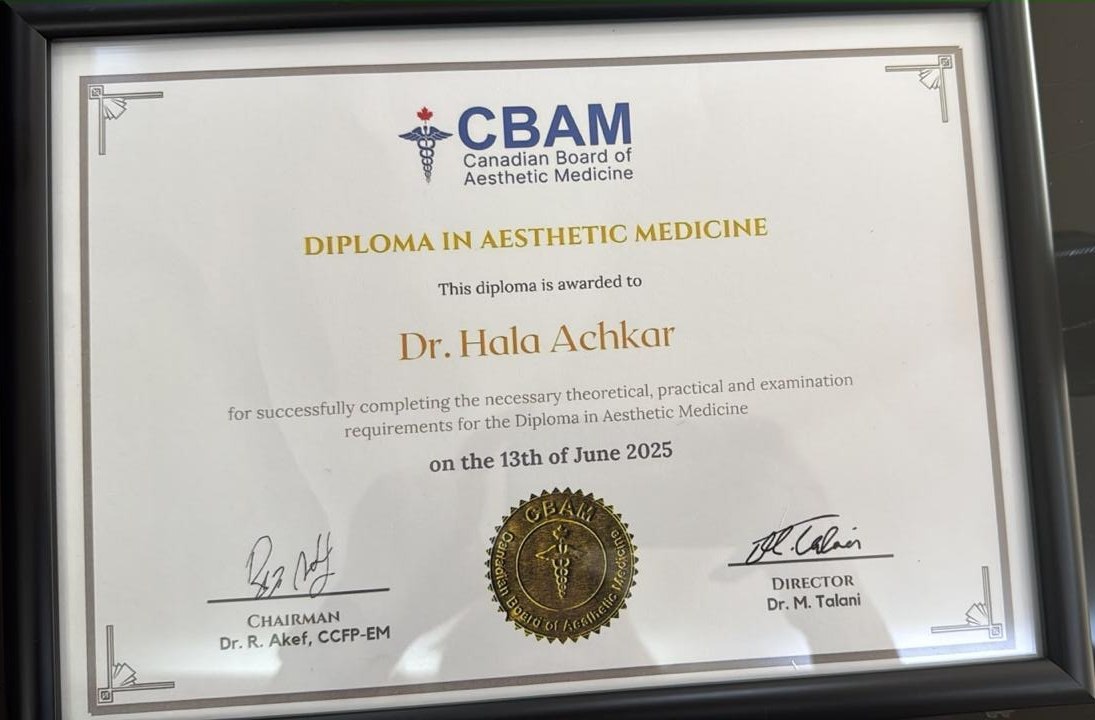
This guide was written by Dr. Hala Ashkar (also written Dr. Hala Achkar), Medical Director of Healthy Beauty Clinic, a hair transplant clinic with 20+ years of experience in Lebanon. She holds a Diploma in Hair & Eyebrow Transplantation from The British Academy of Continuing Medical Education (BACME, September 2026; 400 hours of Category 1 CME) and a Diploma in Aesthetic Medicine from the Canadian Board of Aesthetic Medicine (CBAM, June 2025).
How do I get a medication plan after a hair transplant in Lebanon?
The right plan protects both the transplanted hair and the hair you already have. Book a free consultation at our Beirut branch in Furn El Chebbak or our Jounieh branch in Kaslik, or send photos on WhatsApp to +961 3 708 558. You can also read about hair transplant in Lebanon and 2026 prices.
This article is general information, not medical advice for your case. Consult your doctor before starting, stopping or changing any medication.
Frequently asked questions
Do I have to take finasteride after a hair transplant?
No, it is not mandatory. Finasteride protects native hair that is still sensitive to DHT, so it is mainly suggested for men whose hair loss is still active. Your doctor decides whether it suits you after assessing your age, pattern and health.
When can I start minoxidil again after a hair transplant?
Only when your doctor tells you to. Topical minoxidil is usually restarted once the scalp has healed and the grafts are secure, often a few weeks after surgery. It should never be applied to open wounds or scabs.
Will my transplanted hair fall out if I stop finasteride?
Transplanted hair comes from DHT-resistant donor follicles, so it usually stays even without medication. What finasteride protects is your native hair. If you stop it, the native hair it was protecting may gradually thin again.
What are the side effects of finasteride?
A minority of men report sexual side effects such as lower libido or erection difficulties, which usually go away after stopping. Mood changes and breast tenderness have also been reported. Finasteride also lowers PSA test results, so tell any doctor checking your prostate that you take it.
Is there an alternative to medication after a hair transplant in Lebanon?
Yes. PRP (platelet-rich plasma) uses your own blood plasma to support existing hair, and at Healthy Beauty Clinic it costs $500 to $800 per session. A conservative hairline design and regular follow-up also help. Your doctor can explain which option fits your case.